

Thermal Imaging & Infrared Cameras Explained

Thermal imaging helps make heat patterns visible. A thermal camera receives infrared radiation from a scene and turns differences in the signal into an image. This lets users observe areas that appear warmer or cooler without touching the target or relying on visible light. Thermal cameras are used in equipment inspection, building assessment, process monitoring, security, and embedded sensing. They can also complement visible-light cameras by providing information about surface heat patterns that a standard image may not show.
This technical guide introduces thermal imaging, explains how an infrared thermal camera forms an image, and describes common uses for IADIY’s Thermal Camera Module (TCM) solutions. It also covers practical engineering points to consider when selecting a thermal imager and interpreting radiometric data. Because a thermal camera is part of the broader infrared-camera family, this article specifically clarifies the technical differences between long-wave infrared (LWIR) thermal imaging and active reflected-IR imaging.
Quick answer: How does thermal imaging work, and what is a thermal imager? A thermal imager (or infrared thermal imaging camera) uses an optical sensor to detect infrared radiation emitted by objects in a scene and translates variations in that signal into an image. Unlike standard visible or active reflected-IR cameras, an LWIR thermal camera functions without an active infrared illuminator or ambient light. The resulting thermal image visualizes surface heat patterns; models with calibrated radiometric capability can further estimate numerical surface temperatures based on target emissivity, distance, and reflected background radiation.
What Is Thermal Imaging?
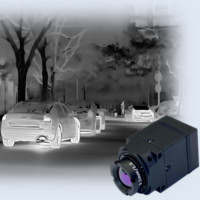
All objects above absolute zero emit infrared radiation. Thermal imaging uses a detector to receive infrared radiation from a scene and display variations in the signal as an electronic image. These variations can reveal patterns associated with differences in surface temperature, helping engineers and inspectors spot anomalies that require closer examination. A thermal image does not present the same visual data as an ordinary photograph: it emphasizes infrared thermal patterns rather than visible colors, textures, or optical surface markings.
Thermal images are typically displayed in grayscale or mapped through a user-selected color palette. The palette assigns colors to signal levels to make thermal gradients easier to interpret; these false colors do not represent the natural optical appearance of the object. While a palette image allows intuitive comparison between areas within the same field of view, it should not automatically be treated as an absolute temperature map. Whether the camera provides numerical temperature values depends on its measurement capability and configuration: standard thermal cameras output image data only, whereas radiometric thermal camera modules can estimate calibrated surface temperatures.
How Does a Thermal Camera Work?
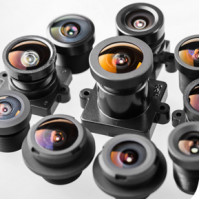
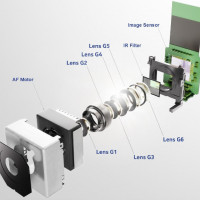
A thermal camera begins with an infrared lens that gathers radiation from the target scene and focuses it onto a detector array. The detector converts the incoming radiative thermal energy into electrical signals. Specialized camera electronics and digital signal processors then process these signals to produce an image that can be displayed, recorded, or transmitted to a host platform via digital interfaces.
The choice of detector technology, lens optics, processing pipeline, and output interface directly affects image fidelity and determines how easily the thermal camera module can be integrated into an OEM product or host system.
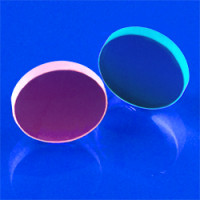
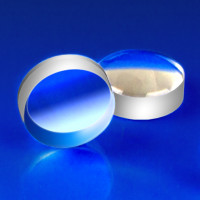
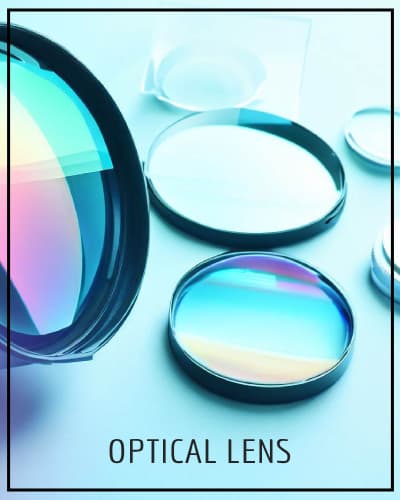
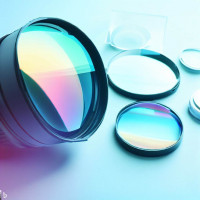
- Infrared Optics: Focuses long-wave infrared radiation onto the sensor plane. Standard glass is opaque to LWIR, requiring specialized materials such as Germanium or Chalcogenide.
- Thermal Detector Array: Converts absorbed infrared radiance into measurable electrical variations across its microbolometer pixels.
- Signal Processing Engine: Applies non-uniformity correction and maps calibrated detector data into grayscale or false-color palettes.
- Radiometric Temperature Estimation: A radiometric camera utilizes calibrated detector curves to estimate temperature values for each pixel. This calculation is influenced by measurement settings, including target emissivity, reflected background radiation, distance, and ambient atmospheric conditions.
This distinction is critical: a processed thermal image and a calibrated temperature measurement are related but not identical. One visualizes infrared radiation patterns, while the other demands a calibrated camera system configured with precise target and environmental parameters.
How Is Thermal Imaging Different from Other IR Imaging?
An LWIR thermal camera—such as IADIY’s TCM—is an infrared camera; it detects long-wave infrared radiance emitted from a scene to display thermal patterns. The received signal is not determined by target temperature alone: surface emissivity and radiation reflected from the surrounding environment also contribute to the detector reading.
In contrast, a reflected-IR camera forms an image from infrared illumination reflected off surfaces, frequently relying on active infrared illuminators (such as 850 nm or 940 nm LEDs) in low-light conditions. While both approaches operate within the infrared spectrum, their imaging principles, spectral bands, and capabilities are fundamentally different.
| Feature | LWIR Thermal Camera (TCM) | Reflected-IR Camera |
| Imaging Principle | Detects LWIR radiance from a scene to show thermal patterns. Received radiation may include both emitted and reflected contributions. | Uses infrared illumination reflected by surfaces to form an image. |
| Typical Spectral Band | Long-wave infrared (LWIR, typically 8–14 µm); exact response depends on camera model. | Commonly Near-Infrared (NIR, 0.75–1.0 µm); some specialized systems use SWIR. |
| Illumination Needs | Does not require an active IR illuminator. Operates without visible light when sufficient thermal contrast is present. | Requires ambient IR or an active IR illuminator, especially in low-light conditions. |
| Image Information | Shows apparent thermal patterns, typically displayed in grayscale or pseudocolor palettes. | Shows reflected-IR intensity and scene details, often as a monochrome photographic image. |
| Temperature Measurement | Radiometric models can estimate surface temperature when properly calibrated and configured. | Generally shows reflected-IR imagery rather than temperature values. |
| Typical Applications | Equipment monitoring, overheating detection, building inspection, and thermal sensing in robotics. | Night vision surveillance, wildlife monitoring, and applications requiring reflected-IR scene details. |
TCM Features and Common Applications
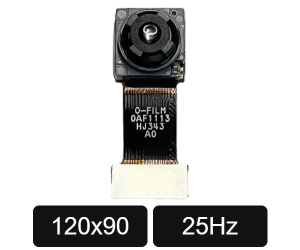
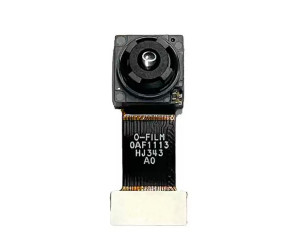
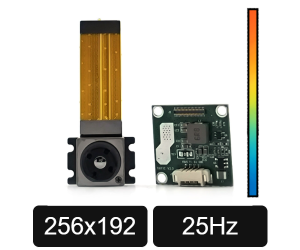
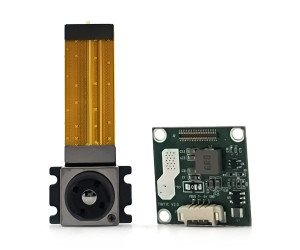
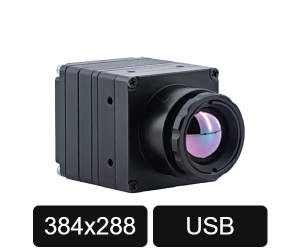
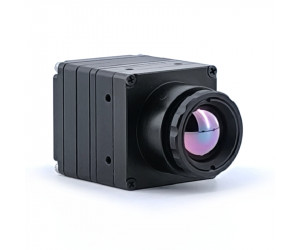
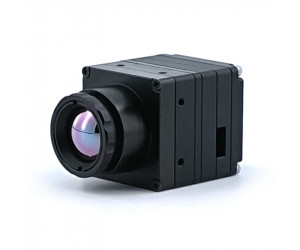
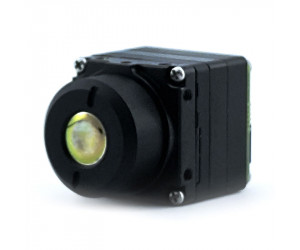
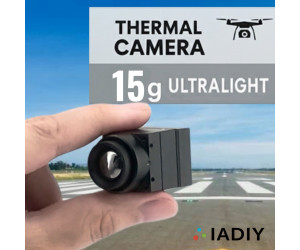
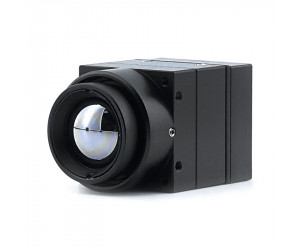
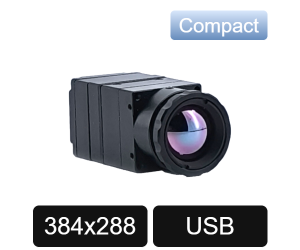
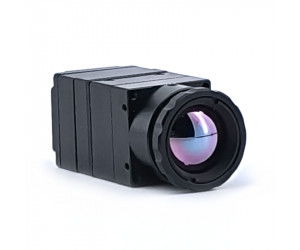
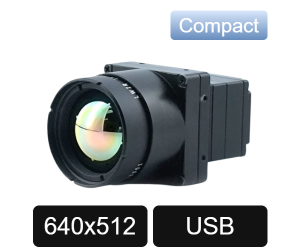
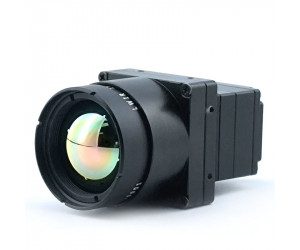
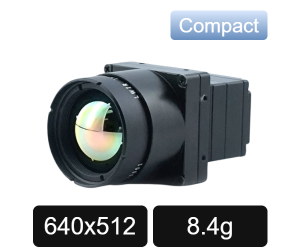
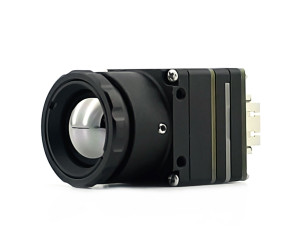
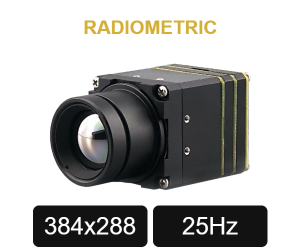
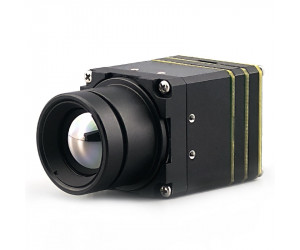
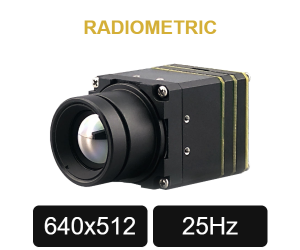
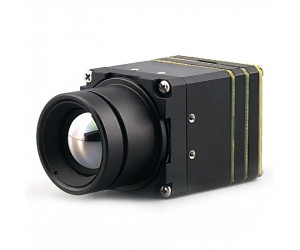
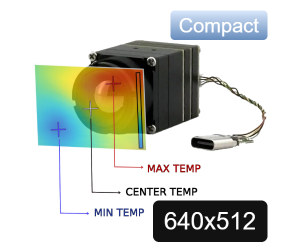
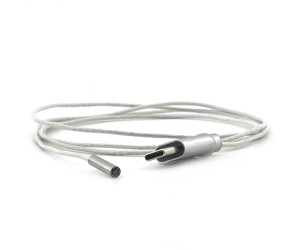
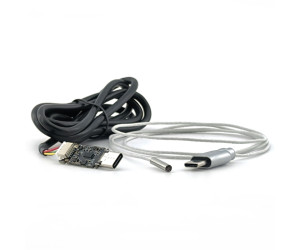
IADIY’s Thermal Camera Module (TCM) family includes compact modules engineered specifically for integration into larger industrial and embedded systems. Available configurations vary by model, allowing designers to select the optimal combination of resolution, lens focal length, frame rate, output interface, and onboard measurement features.
- System Interfaces: Options include standard UVC over USB for plug-and-play PC connectivity, UART for command and control, DVP digital video output for direct processor integration, or raw radiometric data streams.
- Onboard Processing Functions: Selected models support digital image enhancement, customizable color palettes, automatic hotspot/coldspot tracking, and digital zoom.
- Radiometric Support: Available models provide calibrated pixel-by-pixel temperature estimation for critical monitoring systems.
A TCM adds non-contact thermal sensing to machinery and products across diverse sectors:
- Industrial Equipment Monitoring: Routine scanning of electrical distribution panels, motors, bearings, and production lines to detect overheating before failure.
- Building Condition Assessment: Surveying building envelopes to locate insulation gaps, air infiltration, and surface thermal patterns.
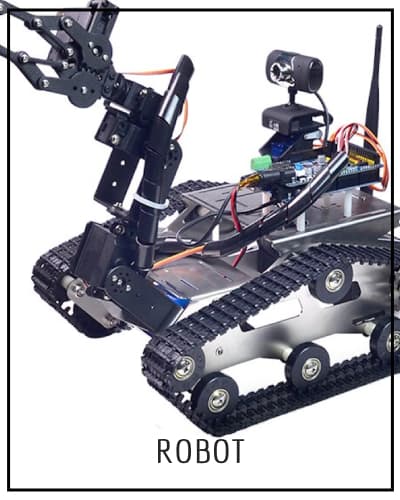
- Robotics & Autonomous Systems: Adding thermal perception to unmanned ground vehicles (UGVs), drones, and automated security robots operating in total darkness or smoky environments.
- Multi-Sensor Fusion: Working alongside visible-light cameras and LiDAR modules when an embedded system requires both high-resolution visual textures and thermal heat data.
How to Choose the Right Thermal Camera Module
Selecting an appropriate thermal imaging camera module requires evaluating target characteristics and system-level constraints together:
- Target Definition & Sensor Resolution: Start by defining what the camera needs to observe. Higher resolution provides finer spatial detail, making it easier to distinguish smaller components or identify targets at longer working distances.
- Thermal Sensitivity (NETD): Noise Equivalent Temperature Difference (NETD) describes the camera’s ability to resolve subtle temperature contrasts under standardized conditions. High thermal sensitivity is essential for low-contrast applications like building envelope diagnostics. Note that NETD reflects sensitivity, not absolute measurement accuracy.
- Lens Focal Length and Field of View (FOV): Determines how much of the scene is captured and how large a target appears on the sensor array at a given working distance. FOV, target size, and working distance must be matched together.
- Radiometric Measurement Capability: If the application requires quantitative temperature readings, verify that the module supports radiometric output and that its temperature range and accuracy fit the operational environment.
- Integration Constraints: Frame rate, latency, mechanical envelope, power consumption, operating temperature range, host platform compatibility, and SDK/software support must all be validated during hardware architecture planning.
Practical Engineering & Measurement Guidelines
- Thermal Cameras Measure Surfaces: Thermal cameras receive radiation from surfaces; they cannot see through solid walls, glass, or opaque barriers.
- Calibrate for Emissivity: Polished or low-emissivity metals reflect background thermal sources; apply high-emissivity matte tape or calibrate software settings before measuring.
- Account for Environmental Loads: Outdoor wind, rain, and solar loading alter surface heat transfer and affect radiometric readings.
- Match Module to Use Case: Compact TCM modules with broad FOV suit handheld or embedded devices, while industrial process monitoring prioritizes continuous radiometric streaming and analysis software.
Limitations of Thermal Imaging Technology
A thermal camera receives radiation emitted from outer surfaces; it does not see through walls or other opaque barriers. When heat from a concealed pipe or internal structure travels through a material, it can create a localized temperature differential on the exterior surface. In such cases, the camera visualizes the surface conduction pattern, not the hidden object itself.
A thermal anomaly identifies an area that requires closer examination, but it cannot establish root cause on its own. Supplemental inspection methods are often required to verify whether an observed pattern stems from a fluid leak, an insulation void, an electrical fault, or another condition.
Furthermore, temperature estimates depend heavily on target emissivity, infrared radiation reflected from surrounding objects, viewing distance, camera calibration, and atmospheric transmission. Low-emissivity surfaces (such as bare copper busbars or polished stainless steel) reflect background radiation and can display misleading apparent temperatures. Environmental factors—including wind, rain, and direct sunlight—also alter target surface temperatures and attenuate the infrared signal reaching the lens. Recognizing these physical boundaries ensures accurate data interpretation.
Frequently Asked Questions About Thermal Imaging
How does a thermal camera work in simple terms?
A thermal camera captures invisible long-wave infrared radiation naturally emitted by objects. A specialized infrared lens focuses this radiation onto a thermal detector (such as a microbolometer), which converts the energy into electrical signals. Camera electronics process these signals into an image where different shades or colors represent variations in the received infrared signal.
What is the difference between a thermal camera and an infrared camera?
A thermal camera is a specific type of infrared camera that detects long-wave infrared (LWIR) radiation emitted directly by objects to show heat patterns. A standard reflected-IR camera captures infrared illumination (usually near-infrared) reflected by surfaces, often requiring an active IR illuminator to produce monochrome night-vision images without measuring temperature.
Can thermal imaging cameras see through walls or glass?
No. Thermal cameras detect radiation emitted from the surface of objects; they cannot penetrate walls or solid barriers. They only reveal subsurface features (like hot water pipes or studs) if those features conduct heat and alter the temperature of the wall surface itself. Furthermore, standard glass is opaque to LWIR and reflects background thermal radiation like a mirror.
What does "radiometric" mean in a thermal camera module?
A radiometric thermal camera is calibrated to estimate temperature values for every pixel in the image array, rather than merely showing visual heat contrast. It allows users to read exact temperature values, provided target emissivity and environmental parameters are properly configured.
What factors affect thermal temperature measurement accuracy?
Temperature estimates can be influenced by target surface emissivity, background infrared reflections, viewing distance, atmospheric conditions, ambient wind, and sunlight. Smooth, unpainted metals have low emissivity and reflect nearby heat sources, which can lead to inaccurate temperature readings unless compensated for.
What is NETD and why does it matter when choosing a thermal sensor?
Noise Equivalent Temperature Difference (NETD) measures a thermal detector's sensitivity—its ability to distinguish minute differences in thermal radiation. Lower values (e.g., <40 mK) mean higher sensitivity, which is critical for resolving low-contrast thermal patterns in building envelope and circuit diagnostics.
Thermal Camera Module Integration: IADIY JDM Engineering
Integrating a thermal camera module into an industrial monitor, handheld diagnostic tool, or robotic payload requires balancing optical field of view, detector sensitivity, mechanical housing, and host communication. IADIY provides Joint Development Manufacturing (JDM) and OEM engineering services to support thermal sensing integration:
- Module Configuration & Optics: Tailoring sensor resolution, Germanium/Chalcogenide lens options, and field of view to target size and operating distance.
- Interface & Communication: Supporting standard interfaces including UVC over USB, UART, DVP, and radiometric data feeds for embedded Linux, Windows, or MCU platforms.
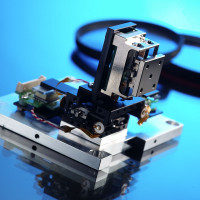
- Optomechanical Packaging: Engineering compact enclosures and mounting hardware designed for thermal stability and industrial durability.
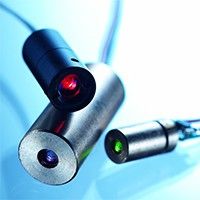
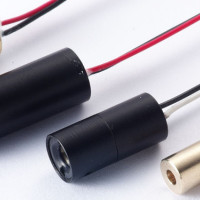
- Sensor Fusion Solutions: Combining thermal camera modules with visible-light cameras and optical laser modules when applications require both visual detail and heat pattern analysis.
Whether your application requires simple thermal visualization or calibrated radiometric temperature monitoring, our engineering team can help evaluate specifications and develop a suitable module configuration.
Planning to integrate an LWIR thermal camera module into your product? Let's discuss your application requirements.
Discuss Your Specifications With Our Engineers →Conclusion
Thermal imaging provides a reliable way to observe heat-related patterns without physical contact or visible light. Understanding how a thermal camera receives infrared radiation and processes it into an image helps users interpret the display accurately and avoid confusing a false-color palette image with a calibrated temperature reading. The optimal Thermal Camera Module (TCM) configuration depends on the specific use case, including target dimensions, viewing distance, required spatial detail, operating environment, host interface, and whether radiometric temperature data is needed.
Thermal cameras belong to the broader infrared-camera family, but they form images through fundamentally different mechanisms than reflected-IR systems. Recognizing the distinction between long-wave infrared (LWIR) thermal emission and reflected-IR illumination allows engineering teams to select the appropriate sensing technology and decide whether thermal data should be used independently or combined with visible-light imagery and other sensors.
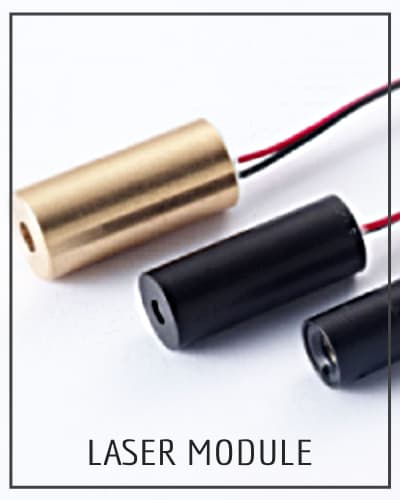
You can also explore our range of laser modules, laser sensors, and optoelectronic manufacturing and JDM capabilities.


Leave a Comment